

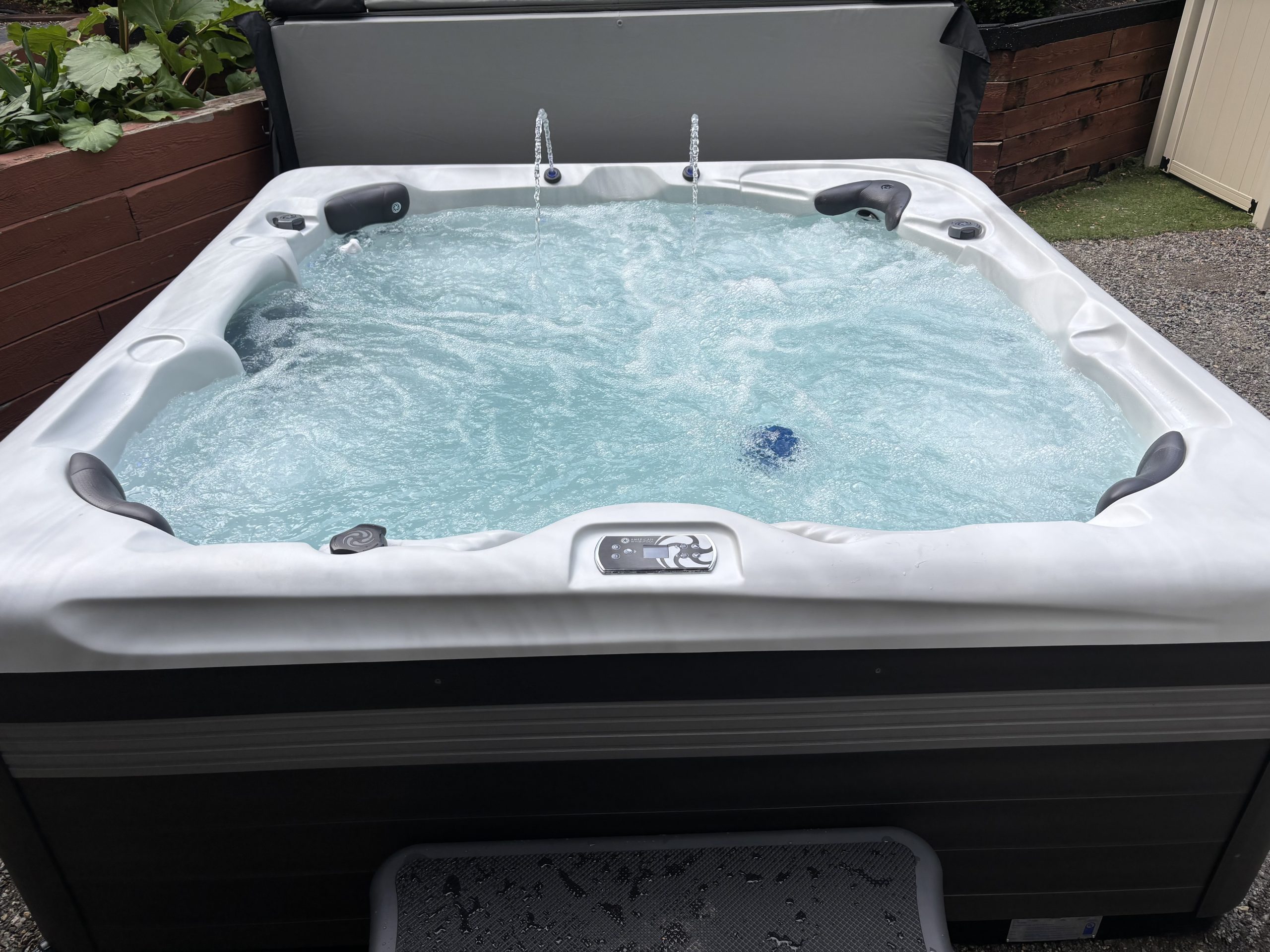
How Much Does a Hot Tub Cost in Minnesota?
If you’re shopping for a hot tub in Minnesota, one of your first questions is probably pretty simple: How much does a hot tub cost?
The answer depends on much more than size. Seating, construction, insulation, jets, hydrotherapy features, pumps, water-care systems, controls, and other options can all affect the price of a hot tub. Delivery and installation requirements can also vary from one home to another.
That’s why comparing hot tubs based on price alone can be misleading. Two spas may look similar from the outside but be very different when you look at how they’re built, how they perform, and what they offer for long-term ownership.
At Blue Lagoon Hot Tubs, we have more than 20 years of hands-on experience in the spa industry. Here are some of the most important things we recommend considering when comparing hot tub prices in Minnesota.
What Determines the Price of a Hot Tub?
There isn’t one feature that determines what a hot tub costs. You’re paying for a combination of the spa’s size, construction, components, performance, features, and engineering.
Some of the biggest factors include:
- Size and seating capacity
- Number and type of jets
- Pumps and performance
- Insulation
- Frame and cabinet construction
- Controls and lighting
- Water-care and filtration systems
- Hydrotherapy features
- Manufacturer warranty
- Delivery and installation requirements
- Dealer service and support
Understanding these differences makes it much easier to compare hot tub prices and determine where you’re actually getting value for your money.
Size and Seating Capacity
One of the most obvious factors affecting hot tub cost is size.
A compact spa designed for two or three people generally requires fewer materials and components than a large six- or seven-person hot tub. Larger spas also hold more water and may require additional pumps and jets to provide good performance throughout the tub.
But bigger isn’t automatically better.
Think about how you’ll actually use your hot tub. If it will primarily be used by you and your spouse, a smaller spa may provide everything you want while taking up less room on your patio or deck.
If you have a family, regularly entertain friends, or simply prefer having more room to stretch out, a larger model may be worth the additional investment.
Take a look at our [American Whirlpool hot tubs](/hot-tubs/) to compare different sizes, seating configurations, and features.
Jets: More Isn’t Always Better
Jet count is easy to compare, so it’s often one of the first specifications shoppers look at.
But the number of jets doesn’t tell the entire story.
Where the jets are positioned, the type of jet, the seating position, water pressure, pump configuration, and areas of the body being targeted can matter just as much as the total number.
American Whirlpool offers models with specialized hydrotherapy features designed to target different areas of the body, including Zone Therapy®, Foot Relief Zone®, and other therapy-focused seating configurations.
When you’re comparing spas, don’t just ask:
“How many jets does it have?”
Also ask:
“What do those jets actually do for me?”
That’s one of the advantages of visiting Blue Lagoon Hot Tubs and seeing different models in person. You can compare seating positions, spa sizes, features, and therapy options rather than making your decision from a list of specifications.
Insulation Matters in Minnesota
Minnesota hot tub owners should pay particular attention to insulation.
Your hot tub needs to maintain warm water when the temperature outside may be well below freezing. How the spa is insulated can affect heat retention and energy use, especially during a Minnesota winter.
American Whirlpool’s Northern Exposure® insulation system uses multiple layers designed to create a thermal barrier, including reflective material and 3M Thinsulate™. The system is designed to help retain heat generated by the spa equipment rather than simply allowing that heat to escape.
This is a good example of why the least expensive spa at purchase isn’t necessarily the least expensive spa to own.
When comparing hot tubs in Minnesota, ask how the spa is insulated and designed for cold-weather operation—not just what the price tag says.
Construction Can Affect Long-Term Value
A hot tub lives in a challenging environment.
It’s exposed to moisture, changing temperatures, snow, rain, and years of heating and cooling cycles. What’s underneath the shell matters.
Look at how the frame, cabinet, base, plumbing, pumps, and other components are constructed.
American Whirlpool uses appliance-grade construction and incorporates durable structural components throughout its spa lineup.
These construction differences can be difficult to see when two hot tubs are sitting next to each other in a showroom, but they can become much more important over years of ownership.
Don’t Forget Delivery and Installation
The price of the hot tub itself isn’t necessarily the entire project.
Before purchasing, think about where your spa is going and what it will take to get it there.
Electrical
Many full-size hot tubs require a dedicated 240-volt electrical connection. Depending on your home and where the spa will be located, electrical work may need to be completed before installation.
Foundation
A filled hot tub is extremely heavy. It needs an appropriate, level surface capable of supporting its loaded weight.
Access
Is there enough room to get the spa from the delivery vehicle to its final location?
Gates, fences, decks, landscaping, retaining walls, stairs, and tight spaces can all affect delivery.
Placement
Think beyond where the hot tub looks best.
Consider privacy, wind exposure, access to the equipment compartment, proximity to the house, and how easily you’ll be able to reach the spa when there’s snow on the ground.
Planning these things before delivery can prevent expensive surprises later.
What Does It Cost to Own a Hot Tub?
Purchase price is only one part of the cost of hot tub ownership.
There are ongoing expenses for things such as:
- Electricity
- Water
- Sanitizer and water-care products
- Filters
- Periodic drain and refills
- Routine maintenance
- Occasional repairs
The exact cost will vary based on the spa, weather, how frequently you use it, the temperature you maintain, and how efficiently the hot tub retains heat.
This is another reason we recommend comparing overall value instead of purchase price alone.
A well-built and properly insulated spa may cost more initially than a basic model, but efficiency, durability, comfort, and serviceability all matter over years of ownership.
Remember to Consider Water Care
Every hot tub requires water care.
Hot water, a relatively small volume of water, and multiple bathers make proper sanitation especially important.
The CDC recommends routinely testing hot tub disinfectant and pH levels. For residential hot tubs, the CDC recommends maintaining at least 3 ppm chlorine and a pH between 7.0 and 7.8.
Blue Lagoon carries the chemicals and supplies you need to take care of your own spa. If you’d rather spend more time enjoying your hot tub and less time maintaining it, we also provide [hot tub maintenance and water-care services](/services/).
Why Your Hot Tub Dealer Matters
A hot tub isn’t something you buy, use for a few months, and throw away. Ideally, you’ll enjoy it for years.
That makes the company standing behind your spa an important part of the purchase.
Before choosing a hot tub dealer, consider what happens after delivery.
Can they help when you have a water-care question?
Do they service hot tubs?
Can they diagnose and repair problems?
Do they offer routine maintenance?
Can you purchase chemicals, filters, and other supplies from them?
Will there be someone local you can call when you need help?
Blue Lagoon Hot Tubs is a family-owned Minnesota business with more than 20 years of hands-on hot tub service and repair experience.
We don’t just sell spas. We provide [hot tub service and repair](/services/), routine maintenance, drain and refills, seasonal service, hot tub moving, chemicals, accessories, and ongoing support.
Should You Consider a Used Hot Tub?
A used hot tub can also be worth considering if you’re looking to reduce your initial investment.
However, condition matters considerably.
Before buying a used spa, consider its age, operating condition, plumbing, pumps, heater, controls, shell condition, cover, and whether replacement parts are readily available.
The cheapest used hot tub isn’t much of a bargain if it immediately needs substantial repairs.
Blue Lagoon offers both [new hot tubs](/hot-tubs/) and [used hot tubs](/used-hot-tubs/), giving you the opportunity to compare options based on your space, needs, and budget.
How Much Should You Spend on a Hot Tub?
Instead of beginning with:
“What’s the cheapest hot tub I can buy?”
A better question is:
“What do I want from my hot tub?”
Before you start comparing models, ask yourself:
- How many people will normally use the hot tub?
- Do you want a lounge seat?
- Is hydrotherapy important to you?
- Are there particular areas you want the jets to target?
- How much space do you have?
- Will you use your hot tub throughout the Minnesota winter?
- How important are energy efficiency and insulation?
- Do you want advanced water-care features?
- How much maintenance do you want to handle yourself?
- How long do you expect to own your hot tub?
Once you answer those questions, it becomes much easier to narrow down the models that make sense for you—and then compare their prices.
Find the Right Hot Tub at Blue Lagoon
There’s no substitute for actually seeing a hot tub in person.
At Blue Lagoon Hot Tubs, we’ll help you compare American Whirlpool models, sizes, seating configurations, hydrotherapy features, and available options without making the process complicated.
Whether you’re looking for a compact spa for two, something the whole family can enjoy, or a premium hydrotherapy experience, we’ll help you find a hot tub that fits your home, lifestyle, and budget.
